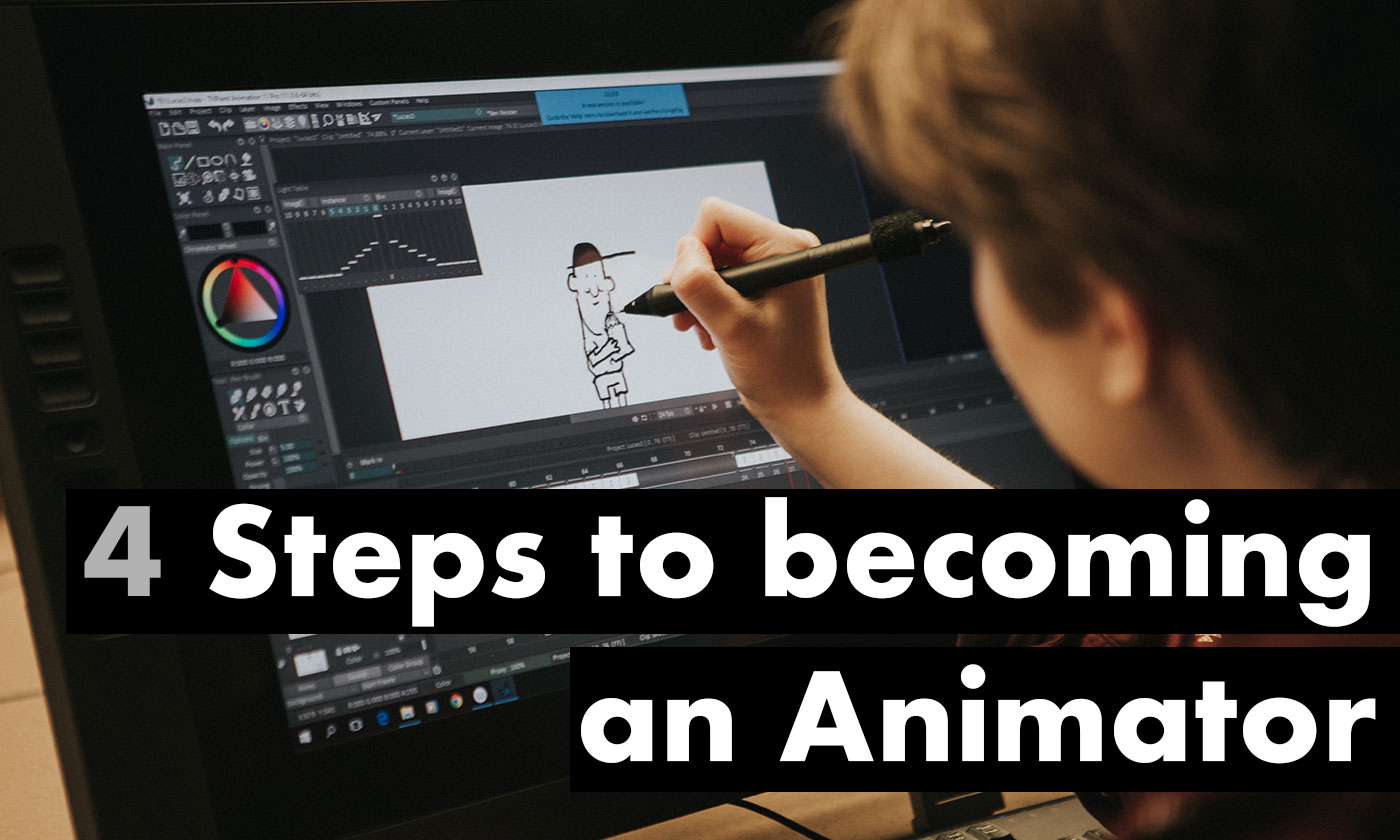
4 Steps to Becoming an Animator
By Joseff on 29 August 2023
Imagine transforming your imaginative stories into captivating visuals that others can experience. If you're driven to bring your creative visions to life and share them with the world, a career as an animator might be perfect for you. This guide will walk you through the steps to embark on your journey toward becoming an animator, offering clear direction and valuable insights.
Understanding the Animator's Role
An animator is responsible for crafting animations and special effects using various tools, such as film, video, and computers. These creations find their way into multimedia products like movies, commercials, and video games. Animators need to possess technical skills with computers and electronics, be adept at design and illustration, and have a grasp of marketing, time management, and budgeting. In addition to these technical skills, animators should excel at teamwork, embrace new animation techniques, communicate effectively with clients, and exhibit creativity. On average, animators earn around $62,343 per year, with potential for higher earnings based on specialization, such as Special Effects Animation which can bring in between $77,700 and $98,950 annually.
Step One: Select Your Animation Specialty
Choose from a range of animation styles: traditional animation, 2D animation, 3D animation, motion graphics, and stop motion animation. Traditional animation involves hand-drawn images that create a sequential narrative, often seen in classics like the first season of "SpongeBob SquarePants" and "Spirited Away" (2001). 2D animation employs computer software to develop character rigs for frame-by-frame illustration, as seen in "The Road to El Dorado" (2000) and later "SpongeBob SquarePants" episodes. 3D animation uses software to create complex character and scene rigs, as showcased in films like Disney/Pixar's "Elemental" (2023) and "The Emoji Movie" (2017). Motion graphics focus on shape and text animations for web development, commercials, and design projects. Two known examples of this animation style are: booting up Nintendo’s Gamecube console and Pixar's logo animation when watching one of their movies. Lastly, stop motion animation captures real-world objects in still frames to achieve realistic, constrained motion, as seen in "Kubo and the Two Strings" (2016) and "Coraline" (2009).
Step Two: Education and Building a Portfolio
While a high school diploma can secure you an entry-level position, most animator roles require a Bachelor's degree in animation or equivalent training. Pursuing a Bachelor's degree will enhance your skills and knowledge. Many art programs also require students to create portfolios showcasing their work. Continuously update your portfolio with high-quality pieces to demonstrate your capabilities to potential employers.
We recommend that you create a portfolio that would be most suited for an animator, as there are different portfolio platforms available suited for different professions. While you can create your own website portfolio if you’ve got the chops, for those who aren’t as tech-savvy, Shorthand is a great platform for animators who want to post their animations that allows for 3 stories for free, though adding more stories will cost $85 per month. Another service that has a 10-day trial with an $8 to $19 per month plan is Dunked, and your portfolio on Dunked can be enhanced with HTML and CSS.
Step Three: Gain Work Experience
To stand out in the competitive field of animation, accumulate as much work experience as possible. Begin as an entry-level art assistant for established animators, or consider entry-level positions in related artistic fields. Freelancing, teaching animation, interning with animation companies, and shadowing professionals are all viable ways to gain valuable experience.
There are a multitude of websites available for anyone interested in looking for work. Indeed and LinkedIn are two well-known websites where you can create a profile to have employers view your resume, and also allow you to search for jobs by utilizing the resume you upload to your profile. Fiverr is a great website to use when beginning your freelance career. Always research the company or the person you are working with to ensure that you won’t fall for a scam.
Step Four: Application and Networking
With a solid educational foundation and relevant work experience, start applying for entry-level animator positions through job posting websites or direct outreach to companies. Even if your target company isn't hiring, they might refer you to other opportunities based on your qualifications. Attend networking events to connect with fellow animators and professionals in the industry.
By following this comprehensive guide, you can position yourself to become a trailblazer in the animation industry. Your journey will involve selecting an animation specialty, acquiring education and experience, and making meaningful connections. With dedication and the right skills, you could be the next pioneer to shape the world of animation.
https://www.indeed.com/career-advice/finding-a-job/how-to-become-animator
People are at the heart of Yusha!
Join our newsletter to keep up to date with all future releases, product updates, specials, and news about Yusha!
